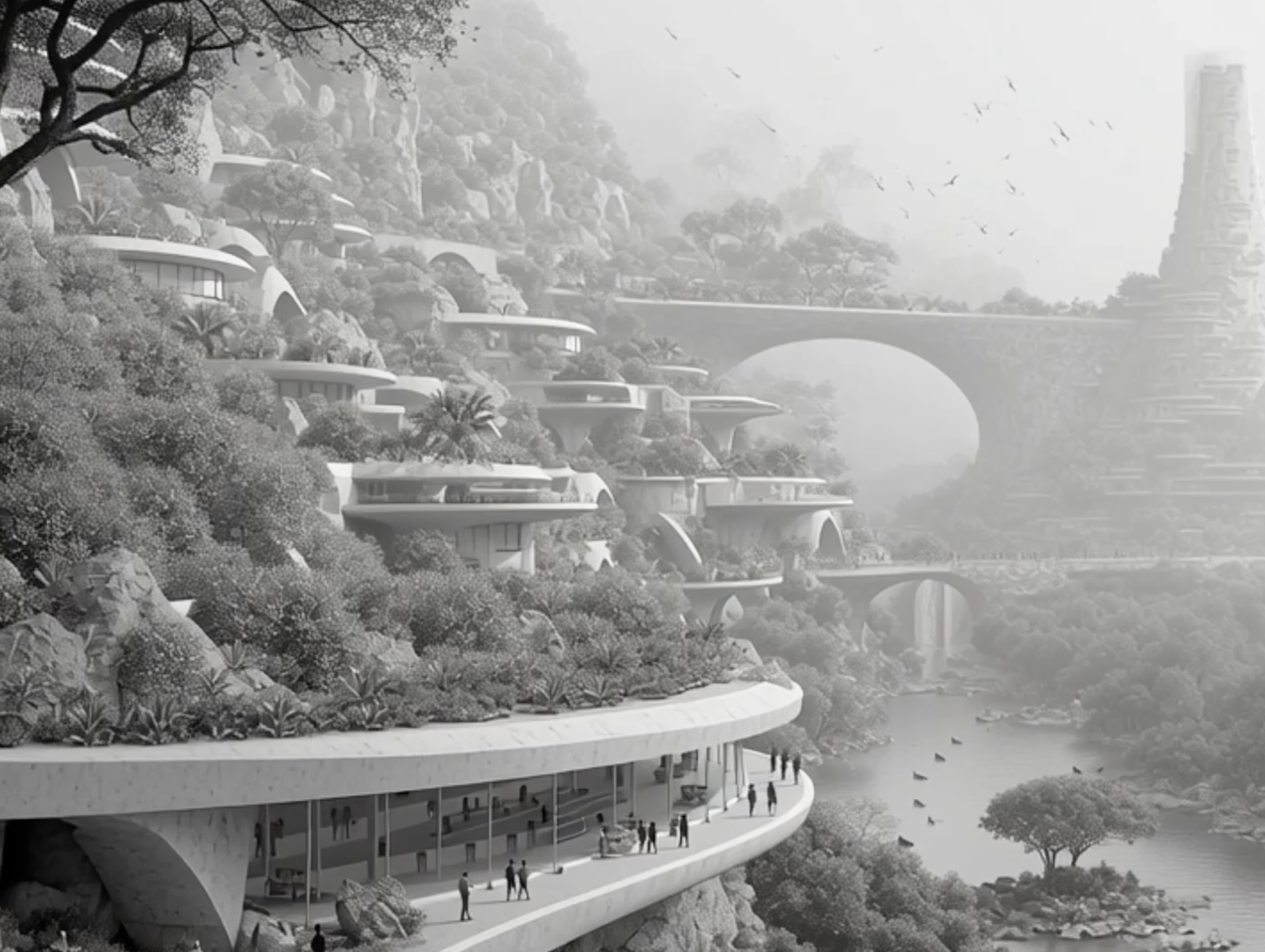
Biodiversity is understood not only as an ecological condition but also as a spatial and cultural challenge for the built environment. This research explores how architecture can contribute to the creation of habitats, ecological connectivity and regenerative relationships between human and non-human communities. Through biodiversity-oriented design, nature-based solutions and habitat integration, architecture is approached as an active participant in the ecological transition of cities and territories.
This research investigates architecture as a space of coexistence between multiple forms of life. Moving beyond human-centred approaches, it explores how buildings, infrastructures and urban environments can accommodate the needs, behaviours and agency of diverse species. The concept of the multispecies city serves as a framework for rethinking urban environments as shared habitats where ecological processes, human activities and non-human communities are intertwined.sciplinary collaborations and European research initiatives, BioHX investigates new relationships between the built environment, ecological systems and societal transformation.
Drawing from environmental humanities, socioecological systems theory and cosmopolitical thought, this research examines the political dimensions of human and non-human coexistence in the Anthropocene. Particular attention is given to questions of representation, ecological governance and more-than-human futures, exploring how architecture can act as a mediator within complex socioecological systems and contribute to regenerative transformations of the built environment.